
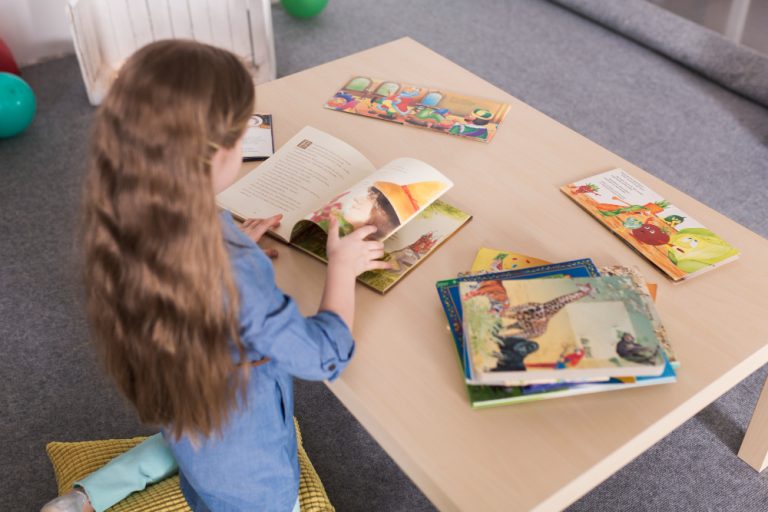
Ask any parent of a 3-year-old and they will tell you the same thing. Picture books are doing more than keeping the little one busy for ten minutes. They are teaching colors, sounds, feelings, words, and the early shape of how stories work. Preschool is the stretch where kids soak up everything, and the right book turns that sponge into a tiny reader-in-training.
If you are trying to figure out what to add to your shelf this year, here is a grown-up look at what makes a picture book really work for preschoolers and how to build a stack that earns its keep.
Why Picture Books Carry So Much Weight at This Age
Preschoolers are in a stretch of life where their brains are building connections at a wild pace. A picture book hands them language, art, and emotion all at once. That combo does things a tablet app never will.
Words Stick Better With Pictures
A 4-year-old hearing the word “bucket” for the first time may or may not remember it. Show them a bright picture of a kid carrying a bucket while you say the word, and it locks in. Preschool brains pair pictures with words way faster than they pair words with definitions.
Stories Teach Kids How the World Works
Preschoolers are trying to figure out everything. Why we share. What it feels like when a friend gets hurt. What happens when you try something hard. Picture books give them safe little practice runs of real life, page by page.
Reading Time Builds the Sit-Still Muscle
Preschool teachers will tell you the kids who get read to at home have an easier time sitting in group circles. It is not magic. It is just practice. A kid who has sat through a story a thousand times at home can sit through one at school.
What a Great Preschool Picture Book Looks Like
Not every picture book is built for this age group. Some are too wordy. Some skim too fast. The ones that actually work for preschoolers share a few things in common.
Art That Tells the Story on Its Own
A preschooler should be able to follow the basic plot just by looking at the pictures. Expressive faces, clear action, and scenes that match the words all matter. When kids can read the art, they feel like readers long before they know letters.
Words That Sound Good Out Loud
Preschool books live in the read-aloud zone. Rhyme, rhythm, and repetition work hard here. Kids love saying lines back with you. If a book feels clunky in your mouth, put it down.
A Pace That Fits a Short Attention Span
Preschoolers can sit for a story, but not a novel. Books that move along, switch up the art, and wrap the whole thing in ten or twelve spreads fit this age like a glove.
A Little Idea Worth Holding Onto
The best preschool books leave kids with something small and real. A feeling. A lesson. A new word. A moment they think about later. Books that entertain and teach at the same time stay on the shelf for years.
Types of Picture Books That Boost Early Learning
Building a preschool library works best when you mix it up. Different kinds of books do different jobs, and kids this age love variety.
Concept Books
These are the ABC books, counting books, color books, and shape books that form the backbone of early learning. They look simple, but they are doing heavy lifting. Kids learn to spot letters in their names, count their fingers, and name the blue truck on the page.
Feelings Books
Preschool is big-feelings season. Tantrums, new worries, first friendships, tricky moments with siblings. Books that name feelings and show kids moving through them give little ones the words they need when they do not have them yet.
Story Books About Kids Like Them
Picture books where the main character goes to preschool, meets a new friend, or figures out a small problem hit home fast. Kids see themselves on the page and learn from watching those little heroes work things out.
Nature & Animal Books
Preschoolers love animals. A book about a turtle slowly making its way across a pond, a bunny finding its way home, or a bird building a nest teaches kids about the world while giving them a warm story to sit with.
Imagination Books
Some books are pure magic. Rocket ships, dragons, dinosaur birthday parties, talking toys. These stretch kids’ imaginations and teach them that stories can go anywhere. Do not underestimate the learning that happens in a story with zero real-world rules.
How to Use Picture Books for Real Learning Moments
Reading the book is the main event, but a few extra habits turn story time into learning time without making it feel like a lesson.
Talk About the Pictures
Point at things. Ask what your kid sees. Let them tell you what they think is happening. Kids who talk about pictures build vocabulary faster than kids who just listen.
Ask Open-Ended Things
Instead of yes or no prompts, try ones that make them think. What do you think he will do next. Why do you think she looks sad. Their answers tell you a lot about how their little minds are working.
Re-Read the Favorites
Preschoolers ask for the same book over and over for a reason. Each re-read, they catch something new. The tenth time through is often when the biggest learning actually happens.
Keep Books in Easy Reach
A shelf they can grab from, a basket by the couch, a small stack near the bed. When kids can reach books on their own, they pick them up more. Simple setup, big payoff.
Stocking a Shelf That Grows With Them
Preschool goes by fast. One year your kid is chewing on board books, the next they are asking you what every word on the page means. Stocking a shelf with a mix of concept books, feelings books, and warm little stories gives your kid something to grow into. Start small, add a few at a time, and you will end up with a library full of books that taught your kid something worth carrying forward.