
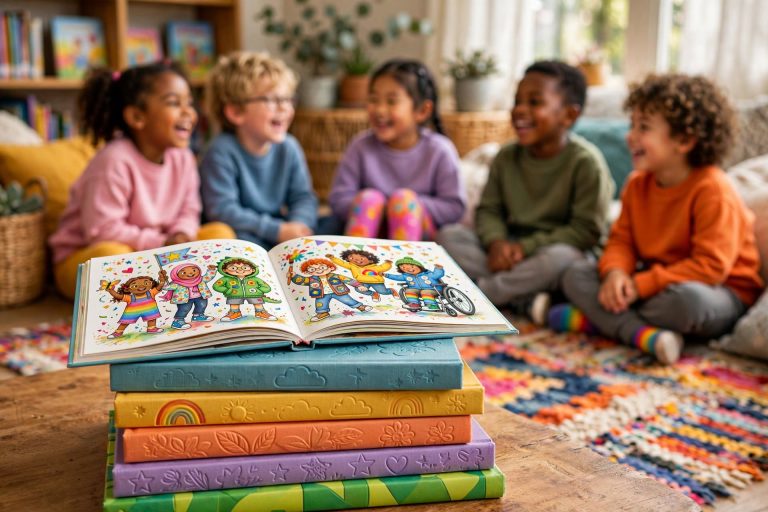
Being yourself sounds simple until you actually try to live it out as a small child. Kids feel the pull to fit in from a very young age. They notice who is popular, who is different, and what happens to kids who stand out in ways that other kids do not like. In the middle of all of that noise, children’s books about being yourself do quiet work. They give kids the message that being who they really are is not just okay but a good thing worth holding onto.
The best of these books stay with kids for years. A child who reads a great “be yourself” story at four or five carries that message into elementary school, middle school, and beyond. The lessons hold up because they were planted early, when the child was still forming their sense of who they are.
Why Being Yourself Is Hard for Kids
Being yourself is not the default for most kids. The default is copying whoever seems to have it figured out, which usually means the loudest or most popular kid in the room. It takes real effort to swim against that current, and it takes even more effort to do it when you are three or four years old.
The Pressure to Fit In Starts Early
Kids as young as three start noticing who is in and who is out. By preschool, kids are already forming groups, copying each other, and sometimes leaving other kids out. A child who feels different in any way, whether in how they look, how they act, or what they like, can start feeling that pressure before they even know what to call it.
Kids Doubt Themselves in Small Ways Every Day
A kid might love a certain toy but stop playing with it when another kid says it is silly. They might have a favorite color but change it if a friend says the color is bad. These small moments of self-doubt happen all the time in early childhood, and each one chips away at the child’s sense of who they are.
Grown-ups Sometimes Add to the Pressure
Even well-meaning adults can send mixed messages about being yourself. A parent might tell a child to be themselves and then correct them for acting in a way that stands out. Kids pick up on these mixed messages fast, and it can be confusing when the world tells them one thing and shows them another.
What Books About Being Yourself Actually Teach
The best of these books do more than just tell kids to be themselves. They show what being yourself actually looks like in real situations.
It Is Okay to Like What You Like
A great “be yourself” book might feature a character who loves something the other kids do not love. The story shows the character sticking with what they love, and the lesson is clear without ever being spelled out. Kids who read these stories learn that their own likes and dislikes are worth trusting.
It Is Okay to Be Different in the Way You Look or Move
Some kids look different from the other kids around them. Some kids move differently, talk differently, or take longer to do things. Books that show a character with any of these differences finding peace with who they are teach a lesson every kid can use.
It Is Okay to Take Your Time
Some of the sweetest “be yourself” stories feature a slow character in a fast world. The character does not need to speed up to fit in. They just need to keep going at their own pace, and by the end of the story the other characters have come to see the value in that pace. Kids who feel rushed by the world around them find real comfort in these stories.
It Is Okay to Feel Big Feelings
Kids sometimes feel like their emotions are too much for the world around them. Books that show a character with big feelings finding a way to be at home with those feelings teach kids that their inner world is not something to hide or shrink.
It Is Okay to Change Your Mind
Being yourself does not mean being locked into who you were yesterday. Books that show a character trying new things, discovering new likes, and letting go of old ones teach kids that growth is part of being a whole person.
Themes That Show Up in the Best of These Books
Certain themes come up over and over in books about being yourself because they capture the real experience of being a small person trying to figure out who they are.
Finding a Friend Who Sees You
Many of the best “be yourself” books include a moment where the main character meets someone who really sees them for who they are. This friend or family member does not try to change them. They just enjoy the character as they are. This kind of moment plants the idea that the right people will love the child as they are.
Realizing You Do Not Need to Be Loud
A lot of these books feature a quiet character who spends the story trying to be louder or bigger to fit in. By the end, the character realizes that being quiet is fine, and that the world needs quiet people too. This message lands hard on shy kids who feel constant pressure to be more outgoing.
Choosing to Stay True Even When It Is Hard
Some of the strongest “be yourself” stories show a moment where the character has a chance to change who they are to fit in and chooses not to. This is a powerful message for kids because it shows that staying true to yourself is a real choice, not just something that happens to you.
What to Look For in a Book About Being Yourself
Not every book with a “be yourself” theme actually works. The good ones share a few clear qualities.
A Character Who Feels Like a Real Kid
The character does not need to look like your kid, but they need to feel like someone your kid can care about. A character with real personality, real quirks, and real reasons for being different is one your child will remember and return to.
A Real Moment of Self-Doubt
The character has to actually feel bad about being different at some point in the story. If everything is easy, the message does not carry weight. A real moment of self-doubt in the middle makes the ending feel earned.
An Ending That Does Not Force a Big Change
The best “be yourself” books do not end with the character suddenly becoming popular or getting everything they wanted. They end with the character feeling at home in who they are, whether or not the outside world has caught up.
How to Read These Books With Your Kid
The book matters, and the way you read it shapes how deeply the message lands.
Pause on the Doubt Pages
When the character in the story feels bad about being different, slow down on that page. Let the picture sit. Give your child time to feel the character’s feelings before the story moves on to the resolution.
Ask Light Questions
After the story, you can ask what your child thought of the character. Follow their lead in the conversation. Do not turn it into a lesson about who they are. Just talk about the story together.
Notice Your Kid’s Own Moments
If your child does something that shows who they really are, mention it in a calm way. A small comment like “I love how you did that your own way” reinforces the message without turning every moment into a talk.
Building a Small Collection of These Books
You do not need many titles to build a strong shelf on this theme. Five or six well-chosen “be yourself” books that cover different angles give your child a rich set of examples to draw from.
You could include a book about being different in appearance, one about being a slow or quiet kid, one about liking something the other kids do not like, and one about finding a friend who sees you as you are. Rotate these books through your regular reading time and pay attention to which ones become favorites.
The Long Payoff of These Stories
Children’s books about being yourself do slow, quiet work over years. Your child will not finish one of these books and suddenly feel completely at home in themselves. The lessons work gradually, showing up in small moments long after the reading is done.
A child who grows up on stories about being yourself becomes a kid who trusts their own instincts, who chooses friends who like them for who they are, and who feels less pressure to change themselves for the crowd. That kind of inner steadiness is one of the greatest gifts a book can give a child, and it starts with the stories you read together in the earliest years.