
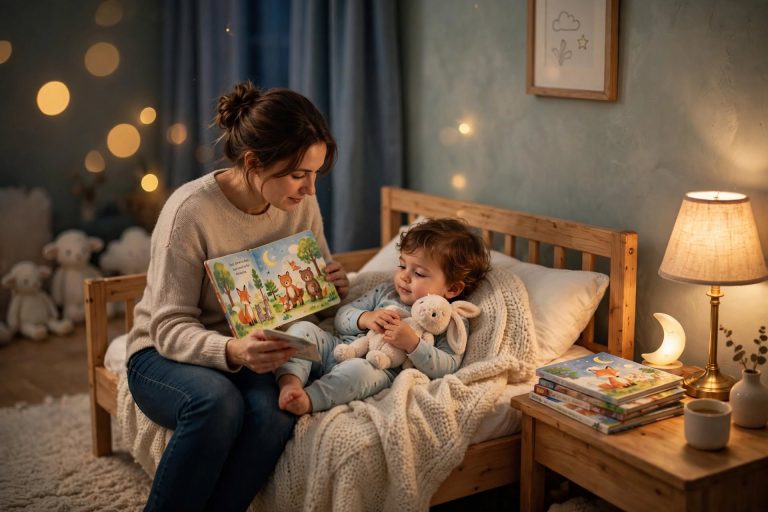
Toddlers and bedtime can be a tricky pairing on the best of days. A toddler at the end of a long day is often tired, wound up, and full of feelings they cannot always name. Add in the resistance to actually going to sleep, and bedtime can turn into a battle no parent wants to fight. The right easy bedtime stories for toddlers can change that whole dynamic. A short, gentle story at the right moment settles the child, marks the end of the day, and pulls the whole room into a quieter mood.
The trick is that not every kids’ book works at bedtime. Some are too exciting, some are too long, and some end in a way that leaves a toddler thinking instead of drifting off. Easy bedtime stories that actually do the job have their own set of qualities, and once you know what to look for, the bedtime routine gets much smoother.
Why Bedtime Stories Work So Well for Toddlers
Toddlers respond to bedtime stories in a way that older kids sometimes do not. Something about the combination of a small body settling in, a familiar voice, and a short story pulls a toddler into a calmer state that makes sleep possible.
They Give the Toddler a Signal
A toddler who hears the same kind of story at the same time every night learns that the story means sleep is coming. Their body starts to slow down at the sound of the book opening. This trained response is one of the most powerful tools a parent has for making bedtime easier over time.
They Turn Bedtime Into Connection
Toddlers spend most of the day being told what to do. Bedtime story time is one of the few moments in the day when a parent just sits with them, holds them close, and shares a story. That closeness is often what makes the toddler willing to settle for sleep afterward.
They Give the Busy Toddler Mind a Rest
A toddler’s mind is going all day. At bedtime, that busy mind often does not want to stop. A gentle story gives the mind one thing to focus on, which is often the bridge into sleep.
What Makes a Bedtime Story Easy for a Toddler
Easy in this context does not mean short and empty. It means the story does not ask too much of a tired toddler at the end of the day.
A Story That Reads Quickly
The right length for a toddler bedtime story is somewhere between three and eight minutes. Any longer than that, and the toddler starts to get restless or fall out of the calm. Any shorter, and the story does not have time to settle them.
Language That Flows Softly
The words in the story should feel good to say out loud in a quiet voice. Short sentences work well. Sentences with a gentle rhythm work even better. Words that require too much effort to say pull both the parent and the child out of the mood.
Pictures That Do Not Overstimulate
Bedtime books should have art that feels calm rather than busy. Soft colors, gentle characters, and pages that are not packed edge to edge with detail all help the toddler stay in the wind-down mode you are trying to build.
A Character the Toddler Already Loves
Toddlers form strong attachments to favorite characters. A bedtime story featuring a character they already know feels comforting in a way that a brand new story does not. This is why the same book gets requested night after night.
Themes That Work Well for Toddler Bedtime
Certain themes come up over and over in easy bedtime stories because they match what a toddler needs at the end of the day.
Getting Ready for Bed
Books about characters brushing teeth, putting on pajamas, and tucking in stuffed animals model the bedtime routine in a way toddlers love. They see themselves in the character and often start doing the same steps in real life.
Saying Goodnight
Stories where the character says goodnight to objects around them, to the moon, or to family members work like a lullaby in book form. The repetition is soothing, and toddlers often join in on the goodnight phrases by the third or fourth reading.
Cozy Animals in Warm Homes
Toddlers respond deeply to small animals settling into warm nests, dens, or burrows. A baby bird in a nest, a bear cub in a cave, or a rabbit in a burrow taps into the feeling of safety a toddler needs to fall asleep.
Parents & Babies Together
Stories about a parent animal caring for a baby animal are classic bedtime fare for a reason. They reinforce the toddler’s sense of being loved and looked after, which is exactly the feeling that helps them settle for the night.
Gentle Rhymes & Songs
Bedtime books that have a soft, rhyming quality often become the most-requested ones. The rhythm calms the toddler, and the predictability of the rhyme gives them something to anchor to as they wind down.
What to Skip at Bedtime
Not every toddler book belongs in the bedtime rotation. A few types work against sleep and should be saved for daytime reading.
Silly Books That Make the Toddler Laugh Hard
Silly books are wonderful during the day. At bedtime, they do the opposite of what you want. A toddler who has just laughed hard is wired instead of settling, and the story ends up backfiring.
Fast-Paced Stories
Books with chase scenes, big adventures, or lots of action get the toddler’s blood pumping. Save these for the afternoon when energy is still welcome.
Stories With Scary Elements
Even mildly scary stories can feel scarier in a dark room at night. A toddler’s imagination fills in the blanks, and small worries turn into big ones by the time the lights go out. Bedtime books should feel completely safe.
Books That End on a Question
Anything that ends without a clear closure can leave a toddler wondering. That wondering keeps them awake instead of settling them. Save the open endings for daytime reading.
How to Read Bedtime Stories to a Toddler
The book matters, and the way you read it matters just as much. A few small habits make the story work harder for the bedtime routine.
Lower Your Voice
Bedtime is not a time for animated reading. You should drop your voice to a quieter, softer version of your normal reading voice. The toddler will match your energy without knowing they are doing it.
Slow Your Pace
Read slower than you would during the day. Let each page sit for a beat. If you feel like you are reading too slowly, you are probably reading at exactly the right pace for bedtime.
Sit Close & Hold Them
Physical closeness is a huge part of what makes bedtime reading work. Sit on the bed, hold your toddler in your lap, or let them lean against you as you read. The touch is part of the calming effect.
Do Not Rush the Ending
When the story ends, do not slam the book shut and jump up. Let the closing pages sit for a moment. Give your toddler a chance to feel the ending before you move on to lights out.
Building a Small Bedtime Book Collection
You do not need many books to build a strong bedtime library for a toddler. Eight to ten well-chosen easy bedtime stories, kept in a small basket by the bed, cover the main types without overwhelming the routine.
You should let your toddler pick which book they want each night from the small selection. Rotate new titles in slowly and retire the ones your child has moved past. Test any new book during the day first to make sure it actually reads as a bedtime book before adding it to the nighttime rotation.
The Long-Term Payoff of the Bedtime Story Routine
Reading the same easy bedtime stories to your toddler over months builds a routine that stays with them long after the toddler years end. The child learns that the day ends with warmth, closeness, and a good story. That association follows them into elementary school and beyond, and it often becomes one of their strongest childhood memories.
Pick warm stories, read them softly, and let the small ritual of bedtime reading turn the roughest night into a calm one. Over time, the story becomes the easiest part of bedtime, and the whole routine gets smoother because of it.