
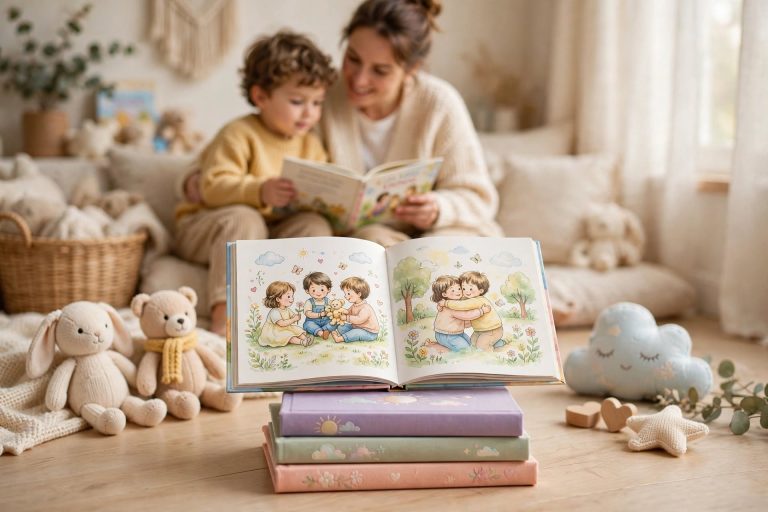
Four is a sweet age for teaching kindness through stories. A four year old can follow a real story arc now, they can name feelings in a character’s face, and they are starting to notice when other kids feel left out or upset. This is the exact moment when books about kindness for 4 year olds do their most powerful work. The lessons that go in at this age become part of how the child treats other people for years to come.
Kindness is not something a child is born knowing how to show. It is a skill that grows through hundreds of small moments, and the stories a four year old hears over and over are some of the most important of those moments. A great kindness book gives the child a model of what being kind actually looks like, and the model sticks in a way that a lecture never could.
Why Four Is the Right Age for These Lessons
Four year olds are in a small window where their brains are ready to take in ideas about how to treat other people. Before this age, kids are mostly focused on themselves. After this age, they start caring more about fitting in with the group. In the middle, they have a real openness to learning what kindness looks like.
They Are Just Learning About Other People’s Feelings
A four year old is starting to figure out that other people feel things too. They notice when a friend is sad, when a sibling is hurt, or when a grownup is stressed. Books about kindness at this age give them concrete examples of what to do when they notice those feelings in real life.
They Are Copying Everything They See
Four year olds copy the adults and characters around them constantly. If they see a kind character in a book they love, they will start copying that kindness in small ways during the day. This mimicry is one of the fastest ways kindness gets absorbed at this age.
They Are Building the Habits That Last
The behaviors a four year old practices become habits that carry forward into school and beyond. A four year old who practices small acts of kindness through stories is much more likely to be a kind six year old, ten year old, and teenager down the line.
What Empathy Looks Like in a Four Year Old
Empathy in a four year old does not look like the adult version. It shows up in small, sometimes clumsy ways that are still real practice for the deeper empathy that comes later.
Noticing Another Kid’s Feelings
A four year old with growing empathy will notice when a friend is upset. They might not know what to do about it yet, but noticing itself is a huge step. Books that show characters noticing each other’s feelings give kids a script for this exact skill.
Trying to Help in Small Ways
Once a four year old notices that someone is upset, they often want to help. Their attempts might be clumsy, like offering their own favorite toy to a crying friend, but the impulse is real and worth celebrating. Stories that model helping teach kids what kinds of help actually work.
Feeling Bad When They Hurt Someone
A four year old with early empathy will feel bad when they realize they hurt someone’s feelings. This gnawing feeling is not fun for the child, but it is one of the most important building blocks of long-term empathy. Books that show characters feeling and repairing this kind of hurt teach kids what to do with the feeling.
Types of Kindness Books That Work at This Age
A rounded collection of kindness books for a four year old covers several different angles because kindness itself is not just one skill.
Books About Kindness to a Friend
The most basic kind of kindness story features a character noticing that a friend needs help and doing something small to help them. These books show four year olds the everyday side of kindness in a way they can copy right away.
Books About Kindness to Someone New
Stories where a character welcomes a new kid to the group teaches four year olds what to do when a new face shows up at preschool or on the playground. This lesson is especially useful right before a school year starts.
Books About Kindness to Animals
Four year olds relate to animal characters in a way that opens their hearts fast. Stories about a child helping a lost puppy, a hurt bird, or a stuck bug teach gentle care and responsibility for smaller creatures.
Books About Kindness After a Mistake
Some of the most powerful kindness books show a character who was unkind, felt bad about it, and then made things right. These stories teach four year olds that kindness can repair a moment, which is one of the most important lessons they will ever learn.
Books About Kindness When It Is Hard
Being kind is easy when everything is going well. Books that show a character being kind even when they were tired, frustrated, or angry teach four year olds that real kindness sometimes takes effort. This is the version of kindness that lasts.
What to Look For in a Kindness Book for a Four Year Old
Not every book with a kindness theme actually works. The strong ones share a few qualities that separate them from books that feel forced.
A Character Who Actually Grows
The best kindness books feature a character who was not kind at the start of the story and learns to be kind by the end. A character who was already flawlessly kind on page one has nowhere to grow, and the story loses its punch.
A Real Moment of Choice
The character has to actually choose to be kind. Kindness that just happens by accident does not teach much. A character who could have walked away and instead chose to help teaches everything.
An Ending That Feels Warm Without Being Preachy
The last few pages of a kindness book matter a lot. Books that spell out the lesson at the end feel like a lecture. Books that let the child feel the warmth without being told what to feel lands much harder.
Art That Shows the Feelings Clearly
Four year olds read faces before they read words. Look for books where the characters’ faces clearly show the emotions they are feeling. This does most of the emotional teaching without a single sentence of extra explanation.
How to Read Kindness Books With a Four Year Old
The book matters, and the way you read it shapes how deeply the lesson goes in.
Pause on the Kind Moments
When the character in the story does something kind, slow down on that page. Let the picture sit for a moment. This helps the child feel the weight of what the character just did.
Talk About the Feelings
You can point out what the different characters are feeling as you read. Small comments like “she looks so happy that he shared with her” name the emotion for the child and reinforce the lesson.
Notice Kindness Later That Day
If your child does something kind after you read a kindness book together, mention it. A calm comment like “that reminded me of the story we read” connects the book to real life without turning it into a formal lesson.
Reread the Books That Land
Some kindness books will become clear favorites for your four year old. You should read them as many times as your child asks. Each rereading lets the message settle deeper, and over time it starts to show up in how the child treats other people.
Building a Small Kindness Book Collection
You do not need many titles to build a strong kindness library. Six to eight well-chosen books that cover different kinds of kindness give your four year old a rich set of examples to draw from as they grow.
You could include a book about kindness to a friend, one about welcoming someone new, one about kindness to an animal, and one about repairing a mistake with a kind act. Rotate the books through your regular reading time and pay attention to which ones become favorites.
The Long Payoff of Kindness Books
Books about kindness for 4 year olds do slow, real work over years. Your child will not finish a great kindness book and suddenly become the kindest kid in the neighborhood. The lessons work gradually, showing up in small moments weeks or months later when the child chooses to be kind without being asked.
A four year old who grows up on stories about kindness becomes a kid who notices when others need help, offers it when they can, and repairs a moment when they have been unkind. That kind of empathy is one of the greatest gifts a parent can give, and it starts with the stories you read together at four and five years old. Pick strong ones, read them often, and trust the process to do its quiet work over time.