
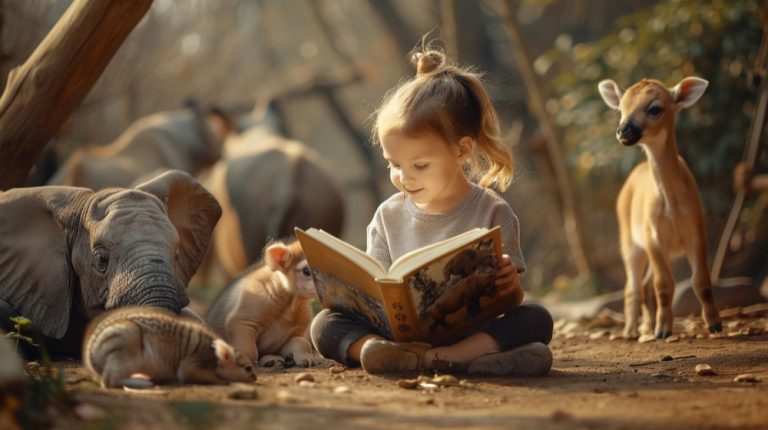
Preschoolers have a sweet spot when it comes to story length. Too short and they want more before you’ve even sat down. Too long and they’re climbing the back of the couch by page six. Short animal stories for preschoolers hit that sweet spot beautifully because they pack a small idea into a small space, and small ideas are what three- and four-year-olds can actually take in.
Animals do something interesting in kids’ books. They let a child step a little outside their own life and watch a lesson play out without feeling lectured. A kid who would never sit still for a story about a boy who lost his temper will happily sit through a story about a fox who lost his temper. Same lesson. Different doorway.
Why Animal Characters Work So Well at This Age
If you’ve ever tried to explain a feeling to a four-year-old, you know it’s a slippery business. They feel everything but they can’t name much. An animal character does the naming for them in a sense. A grumpy bear shows them what grumpy looks like from the outside. A scared bunny shows them what scared looks like. They watch it, they recognize it, and slowly they start matching it to their own inner experience.
There’s also the matter of distance. When a story is about a kid in a kid’s room with kid problems, the listener can get a little too involved. They can feel attacked if the moral lands close to home. Make the character a hedgehog and suddenly there’s enough space to absorb the lesson without putting up a wall.
The Natural Drama of Animal Life
Animals have built-in stakes. A small mouse trying to cross a stream is dramatic without needing any extra setup. A bird who can’t quite fly yet, a turtle who can’t keep up with the rabbit, a duckling who got separated from the others. The situations are simple, and that’s what preschoolers need. No subplots. No backstory. Just one creature, one problem, one resolution.
What Makes a Short Story Work for This Age
Not every short story is a good short story. Some are too rushed. Some are too thin. The good ones feel small but full.
Length That Actually Matches a Preschooler’s Attention
A solid short story for this age sits somewhere between four and ten minutes of reading aloud. That’s about eight to sixteen pages with art on most of them. Longer than that and you’ve lost the room. Shorter and the lesson doesn’t have time to land. Aim for stories where you can finish in one sitting before bath time or in the wind-down before bed.
One Feeling at a Time
The best short animal stories pick one emotional thread and stick with it. Loneliness. Curiosity. Patience. Bravery. If a book tries to do three lessons in twelve pages, none of them will stick. Pick one and let it breathe.
Pictures That Pull Their Weight
In a short story, the illustrations are doing half the storytelling. A face on a frog that goes from worried to relieved across two pages can carry an entire emotional arc without a word. Look for books where you could almost follow the story with the words covered up.
Lessons That Travel Well Through Animal Characters
Some lessons land especially well when they come through an animal.
Friendship & the Bumps That Come With It
Friendship at the preschool level is dramatic. One day everyone is best friends. The next day someone won’t share the blocks and the world is ending. Animal characters work beautifully here. Two squirrels who fall out over a nut and then make up. A pair of birds who learn to take turns at the feeder. Kids see the pattern of conflict and repair without it feeling like a parent trying to drive home a point.
Honesty in Small Moments
A small lie at age four can feel huge in the moment. A story about a raccoon who blames a mess on his brother and then feels bad about it lands differently than a parent lecture. Kids recognize the gnawing feeling that comes after a small dishonesty, and seeing it on a character helps them name it later.
The Slow Value of Patience
Patience is one of the harder lessons for a preschooler. Animal stories are good at it because animals do things on their own time. A seed grows slowly. A caterpillar takes weeks to change. A baby bird learns to fly in fits and starts. Watching these slow processes through a story is more useful than telling a child to wait.
How to Read These Stories So the Lesson Lands
Reading the story aloud is the easy part. What you do around the reading is where the real magic happens.
Slow Down on the Emotional Pages
When you get to the page where the character feels sad or scared or proud, slow your voice. Let the pause sit. Kids will look at the picture longer if you give them time. Don’t rush to the resolution. The middle of the story is where the work gets done.
Notice Without Explaining
If your kid says something about the story, just take it in. Don’t turn it into a teaching moment. Say something like “yeah, I noticed that too” or “that part got me.” Kids process out loud, and if you turn their processing into a lesson they’ll stop processing out loud.
Let Them Request the Same One Again
If your kid asks for the same short story three nights in a row, that’s a signal. Something in it is feeding them. Don’t push for variety. Read it again. Read it ten more times. They’ll move on when they’ve gotten what they came for.
Stretching a Short Story Into a Bigger Conversation
A short story for a preschooler doesn’t have to stay short in its effect. You can build on it in small ways across the days that follow.
Bring up the character at random times. If you see a turtle at the park, mention the story. If your kid is being patient about something, link it back. Don’t force it. A light, casual reference now and then keeps the story alive in their head longer than the story itself.
You can also act it out. Three- and four-year-olds love physical play. Acting out the squirrel sharing the nut, or the bunny being brave, turns the lesson into something they own with their body, not just something they heard. That kind of embodied learning sticks in a way that listening alone can’t match.
Pacing a Small Collection Through the Week
You don’t need a huge stack. Pick five or six short animal stories and rotate them. Maybe one becomes the Monday story, another the Wednesday story, and so on. Or let the kid pick from a small basket. The repetition helps. The familiarity helps. And when you bring a new one in every few weeks, it feels like an event.
Keep one short story in the bag for the car. Keep one in the diaper bag for waiting rooms. Short stories are portable in a way that longer books aren’t, and a five-minute story at a frustrating moment can change the whole tone of an outing.
A Few Qualities of Stories That Hold Up Over Time
The short animal stories that get passed from one family to another tend to share a few qualities. They have a small problem that feels real to a small person. They have characters with clear feelings. They have an ending that makes the listener feel something, not just learn something. They tend to use language that has a little rhythm, a little music, so reading aloud feels good.
If you can find a few that do all of that, hold onto them. Those are the ones your kid will remember when they’re grown.
A Closing Thought on the Slow Build
A short story may only take five minutes to read, but the lessons inside it work on a longer timescale. The bunny who learned to share a carrot at age three becomes a kid who shares a sandwich at age five. The fox who said sorry at age four becomes a child who apologizes more easily at age seven. None of this is linear, and none of it is guaranteed, but reading these stories consistently does something real over time.
That’s the quiet promise of a good short animal story. Five minutes of reading now, a little bit of character-building forever. Hard to beat that ratio.