
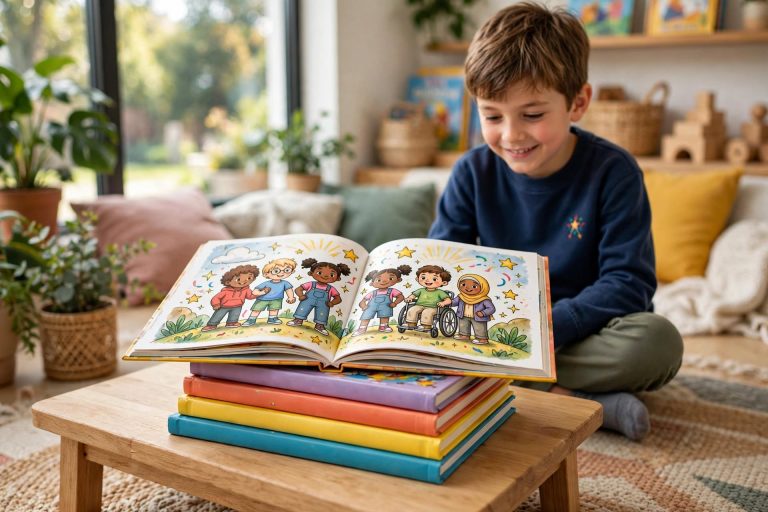
Confidence is one of those things that shows up in a kid’s life quietly. Some kids seem to have it in buckets from a young age, while others struggle to find their footing well into elementary school. The good news for any parent is that confidence is not fixed at birth. It grows through a hundred small moments over the years, and books are one of the best tools for building it.
Kids books about confidence do slow, real work in a child’s mind. They show young readers what confident characters look like, how those characters handle setbacks, and what it feels like to try something hard and come out the other side. The right stories give kids a model to follow without ever feeling like a lesson, and the best of them get pulled off the shelf again and again for years.
Why Confidence Matters So Early
Confidence built in early childhood carries a child through the harder moments that come later in school, in friendships, and in every new experience they face. A child who feels sure of themselves at four or five walks into kindergarten ready to try things. A child who does not feel that way carries the doubt with them into every classroom, playground, and social situation for years to come.
The Long-Term Payoff
Kids who build confidence early tend to take more chances in school and stick with hard tasks longer. They are also more willing to ask questions when they do not know something, which is one of the most important skills a young learner can have. Confidence is not about thinking you are better than everyone else. It is about knowing you are capable of trying, failing, and trying again without falling apart.
How Books Help More Than Talk
You cannot really talk a kid into feeling confident. Telling a child “you can do it” over and over does very little if the child does not already believe it. Books work differently because they show confidence in action through characters the child cares about. A young reader who watches a small character face a hard moment and get through it starts to feel that same possibility for themselves.
What Confidence Looks Like in Kids
Confidence in a young child does not look like a boardroom pitch or a rousing speech. It shows up in small, quiet ways that parents sometimes miss.
Willingness to Try New Things
A confident kid is willing to try something they have never done before, even if they are not sure they will be good at it. They might swing higher on the swing, try a new food, or ask a new kid to play. This willingness is one of the earliest signs of real confidence taking root.
Bouncing Back From Small Failures
Confidence is not about never failing. It is about getting back up when things go wrong. A confident child who spills their drink, misses a catch, or messes up a song does not fall apart. They shake it off and try again, because they know one small failure does not define who they are.
Speaking Up in a Group
A child with confidence can raise their hand in class, share an idea at the dinner table, or tell a friend they do not want to play a certain game. Speaking up in a group is one of the hardest confidence skills to build, and books that model it do real work for young readers.
Types of Confidence Books Worth Having
A well-rounded shelf of confidence books covers several different angles because confidence itself is not just one skill.
Books About Trying Something New
These stories feature a character who is nervous about doing something for the first time and then finds the courage to try it. The new thing might be as small as tasting a new food or as big as starting a new school. What matters is that the child sees the character take the leap and come out the other side.
Books About Learning From Failure
Confidence stories that show failure are some of the most important ones a child can read. A character who tries something and does not get it right, then tries again and improves, teaches kids that failure is part of the process rather than the end of it. This lesson pays off for the rest of the child’s life.
Books About Being Small
Small characters facing big situations make natural confidence heroes for young readers. A tiny mouse standing up to something scary, or a small kid handling a grown-up problem, gives young readers permission to feel powerful even when they are physically small. Kids relate to being the smallest one in the room, and these stories speak directly to that feeling.
Books About Speaking Up
Stories where a character finds their voice and says what they think are especially useful for shy or quiet kids. The story does not have to end in a dramatic speech. Sometimes the character just tells a friend how they really feel, and that small act of honesty is the whole lesson.
Books About Asking for Help
Confidence includes knowing when to reach out for support. Stories where a character realizes they cannot handle something alone and asks a parent, teacher, or friend for help teach kids that asking is a strength rather than a weakness. This lesson is one of the most useful ones a child can carry into school and beyond.
What to Look For in a Confidence Book
Not every book with a confidence theme actually helps. The strong ones share a handful of qualities that separate them from books that feel forced.
A Character Who Was Not Born Confident
The best confidence books feature a character who has to earn their confidence over the course of the story. A character who was already brave and sure of themselves on page one has nowhere to grow, and the story loses its punch as a result.
A Real Struggle in the Middle
The character needs to actually struggle with the thing that scares them. A quick, easy resolution feels fake to a young reader. A real struggle with a real breakthrough at the end makes the confidence feel earned.
An Ending That Fits the Real World
The best confidence books end in ways that match how confidence actually works. The character does not become fearless. They just get through the one hard moment they were facing, and they know they can do it again the next time.
How to Read Confidence Books With Kids
The book matters, and the way you read it matters just as much for the message to land.
Pause on the Brave Moments
When the character does something brave, slow down on that page. Let the picture sit for a moment. This helps the child feel the weight of what the character just did.
Notice Your Kid’s Own Brave Moments
If your child does something confident later in the day, mention it in passing. A quick comment like “that was brave of you to try that” reinforces the lesson from the book without turning it into a formal talk.
Reread the Ones That Land
Some confidence books will become clear favorites. You should read them as many times as your child asks. Each rereading lets the lesson settle deeper into the child’s mind, and over months the confidence starts to show up in real life.
The Slow Payoff of Confidence Books
Books that build confidence in kids do not produce instant results. Your child will not finish a great confidence book and suddenly become the boldest kid on the playground. The lessons work slowly, showing up weeks or months later in small moments you may not always notice.
A child who grows up with a shelf full of confidence books becomes a kid who tries new things more readily, bounces back from setbacks faster, and speaks up when it matters. That growth is the real payoff of reading these stories together over time. Pick strong ones, read them often, and trust the process to work at its own pace. The confidence you help build now will carry your child through every stage of life still to come.