
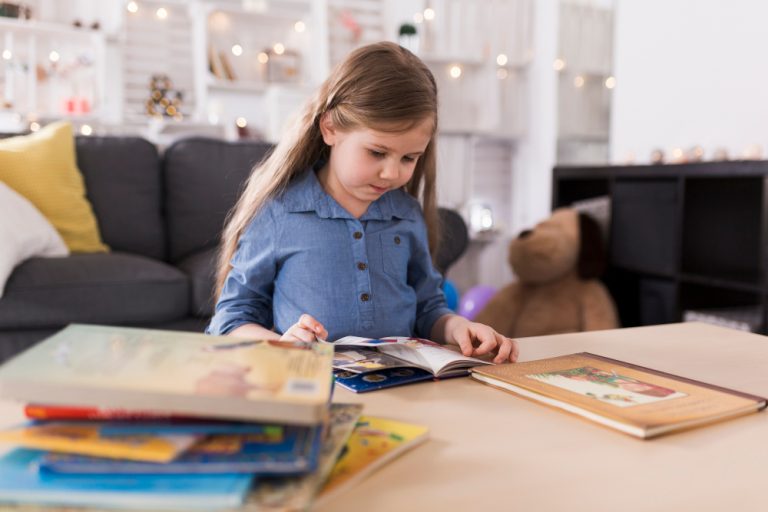
The years between three and five are some of the busiest of a kid’s life. They’re learning words at a pace they will never match again. They’re starting to notice patterns, count things, ask why about everything, and pretend their stuffed animals have full social lives. Children’s books for ages 3-5 sit at the middle of all this growth, and the right ones do a quiet kind of heavy lifting.
A book in this window isn’t just entertainment. It’s a tool for vocabulary, for emotional growth, for early reading, for sleep routines, for cuddles, for car rides, and for those long stretches at grandma’s house when the kid needs something familiar. Pick the right books and they end up doing five jobs at once.
What to Look For in a Book at This Age
A book for a three-year-old is a different beast from a book for a five-year-old, even though we often lump them together. A three-year-old wants pictures, rhythm, and a short arc. A five-year-old wants a story with stakes and a real ending. The good news is that some books work for both, and those are the ones worth investing in.
Words That Feel Good to Say
Books at this age are read aloud. The words have to feel good in an adult mouth, because that adult is going to read them a hundred times. Look for sentences with a little rhythm. Avoid stiff prose. If the first page sounds like a textbook, put it back.
Pictures That Reward a Second Look
A great book for this age has art you can look at again. Hidden details, expressions on background characters, little jokes tucked into the corners. Kids will spot things you missed on the tenth read. That’s part of what makes them want to come back to it.
A Clear Feeling Running Through It
If the book is funny, gentle, exciting, or sad, the feeling should be clear and consistent. Books that try to do too many tones at once confuse this age. A funny book should be solidly funny. A gentle bedtime book should be solidly gentle.
Skills These Books Help Build
Reading aloud at this age does a lot more than entertain. Here’s some of what’s happening under the surface.
Vocabulary That Goes Beyond Everyday Speech
Kids hear maybe a thousand or so different words in normal household talk. A good book brings in hundreds more. Words for weather, for emotions, for animals, for movement, for time. Even if the kid can’t define a word, hearing it in context teaches them to recognize it. That builds the foundation for reading later.
Following a Story Arc
A three-year-old’s first stories are episodic. Something happens, then something else happens. By the time they’re five, they can follow a beginning, middle, and end. Books are how this skill develops. They teach kids that stories build, that tension goes somewhere, that endings tie things together.
Recognizing Letters & Sounds Without Pressure
You don’t need to make book time into reading practice. Just by reading regularly, your kid picks up the shapes of letters, the directions of pages, the idea that print carries meaning. When you point to a word now and then or trace your finger under a line, you’re laying groundwork without making it feel like school.
Emotional Vocabulary
Books are one of the best ways to give kids names for what they feel. A character feels disappointed and you say the word, and now the kid has a label they didn’t have before. Over time, kids who get a lot of emotional vocabulary from books are better at handling their own emotions and naming them in the moment.
Categories of Books Worth Having in the Mix
You want some variety in the home library. Here are a few categories that earn their shelf space.
Picture Books With a Real Story
These are the workhorses. They have a character, a problem, and a resolution. Twenty to forty pages, give or take. Read in one sitting. Build skills like attention, narrative, and empathy.
Concept Books
Books about colors, numbers, opposites, shapes, weather. These don’t have a story so much as a teaching idea, but the good ones are visually rich and fun to read. They’re great for younger kids in this range who are still soaking up basic categories.
Books With Rhyme & Rhythm
There’s something about a rhyming book that sticks in a kid’s brain. They memorize whole lines. They predict the next word. They start playing with sound. This is early literacy gold, and it doesn’t feel like work.
Books About Feelings
A separate category from picture books with stories, these focus on naming and exploring emotions. Anger, sadness, jealousy, excitement, embarrassment. Kids at this age are starting to feel all of these in big ways and they need help naming them.
Books About Everyday Life
The first day of preschool, going to the dentist, a new baby in the house, sleeping over at a grandparent’s. These books prepare kids for upcoming experiences. They take some of the fear out of new things.
Reading Habits Worth Building
The book itself matters, but how you read it matters just as much.
Read Every Day if You Can
Even ten minutes a day adds up. Kids who get daily reading at this age tend to have an easier time when school starts. It’s not about pushing reading skills early. It’s about making books feel like a normal, comfortable part of life.
Let Them Turn the Pages
Even if they turn two at a time and skip your favorite spread. Giving them control over the physical book makes the experience theirs. They learn how books work from the inside.
Pause When They Want to Look
If your kid stares at a picture for a full minute, let them. Don’t rush. They’re taking it in. Some pictures are doing real work for them.
Let Them Tell You the Story Back
Pick a book they know well and let them tell it. They’ll miss parts. They’ll add parts that aren’t there. That’s the whole point. Telling the story back is how it gets cemented in their memory.
What to Skip
Not every children’s book is worth reading. Skip the ones that talk down to kids. Skip the ones with lessons hammered in too hard. Skip the ones that are clearly written by adults trying to be funny rather than adults paying attention to what kids think is funny. And skip the ones with art that feels generic.
You’ll know the bad ones because your kid won’t ask for them again. Listen to that. Kids vote with their requests.
Building a Small Home Library That Grows With the Child
You don’t need a huge collection. Twenty or thirty good books, rotated and revisited, beats two hundred books shoved on a shelf. Pick a mix from each category mentioned above. Add a few new ones every birthday or holiday. Donate the ones your kid has outgrown. Let the collection breathe.
Library trips can fill the gaps. Get five or ten books at a time. Keep them in a basket. Read whatever catches their eye. When they fall in love with one, that’s the one to buy.
When Kids Start to Read for Themselves
Somewhere in this age range, some kids will start sounding out words on their own. Others won’t, and that’s fine. Don’t push it. The kids who read at four don’t end up smarter than the kids who read at six. What matters is that the kid loves books, not that they read early.
If your kid is showing interest in reading words themselves, follow their lead. Point at words now and then. Let them try. Don’t correct too much. Reading should feel like fun, not like a test.
The Point of All This
The books your kid loves between three and five become memories. They become the soundtrack of cuddly mornings and sleepy nights. They become inside jokes you reference years later. They become the first stories your kid will tell to their own kids someday.
That’s worth taking seriously. Not in a stressful, performance-oriented way. Just in a “let’s pick some good ones and read them together” way. The books don’t have to be famous. They don’t have to be educational in any obvious way. They just have to be books you both enjoy. The rest takes care of itself.
The right ones for ages three to five aren’t the ones on the bestseller list necessarily. They’re the ones your kid keeps reaching for. Trust that signal. Build the library around it. Watch how much they grow with the right stack of books at their side.