
If you’ve ever watched two toddlers fight over a single red crayon when there are eighteen other red crayons in the box, you already know why we need children’s books about kindness and sharing. The lesson doesn’t always sink in the first time. Or the tenth. But stories have a way of slipping past the resistance kids put up when a parent tries to lecture them, and that’s exactly why a good picture book can do work that a thousand “be nice to your brother” reminders cannot.
This is going to be a fun one to dig into, because kindness and sharing aren’t really two separate ideas in a kid’s head. They sit right next to each other, sometimes overlap, sometimes get tangled up in feelings about fairness, ownership, and pride. A story can untangle those threads gently, without anyone losing face.
Why Stories Work Better Than Lectures
Kids tune out lectures fast. Their brains are wired for narrative, characters, and pictures. When a child hears a story about a small bear who refuses to share his honey and then feels lonely when nobody comes to his picnic, the lesson lands sideways. The kid isn’t being told to share. They’re watching what happens when someone doesn’t, and that sticks.
That’s also why repetition works in this space. A four-year-old who has heard the same book ninety times isn’t being lazy. They’re rehearsing the emotional beats, learning what disappointment looks like, what reconciliation looks like, what a kind gesture feels like from the outside. Reading a story over and over isn’t a waste. It’s practice.
The Role of Pictures
For early readers, art carries half the message. A picture of two kids sharing a sandwich on a park bench tells the story almost on its own. When the words and the art line up, the meaning is doubled. When they slightly contradict each other, like words that say everything is fine and a face in the illustration that says otherwise, kids pick up on tone, irony, and emotional layering. That’s a skill that pays off later in life.
What to Look For When Picking These Books
Not every book about kindness lands. Some are too preachy. Some are too abstract. Some try so hard to deliver a moral that the story gets crushed under it. Here’s what to look for.
Characters Who Feel Like Real Kids
The best stories about sharing don’t feature angelic children who instantly do the right thing. They feature kids who hesitate, get angry, want to keep things, and then slowly come around. A child reading or listening can recognize themselves in that hesitation. If the character is too good from page one, there’s nowhere to grow, and no lesson to take in.
Small Situations, Not Big Ones
A book about a kid refusing to share one cookie at snack time will land harder than a book about world peace. Kids live in tiny moments. The crayon, the swing, the last cracker. Books that meet them at that scale are the ones they remember.
An Ending That Feels Earned
Skip the books where everything resolves in a tidy three-page wrap-up. Look for stories where the character actually feels something change inside them. Maybe they share because they finally see how their friend feels. Maybe they apologize because they finally connect cause and effect. Those endings hold up because they reflect real life.
Building a Small Home Library Around These Themes
You don’t need a hundred books. You need maybe ten or fifteen good ones that you cycle through. Pick a handful that handle sharing directly, a few that handle empathy in quieter ways, and a couple that show kindness toward strangers, animals, or kids who are different in some way.
Rotate them. Pull out a new one when the old one starts to feel stale, and put the old one away for a few months. When it comes back, it’ll feel new again. Kids’ memories are short for some things and very long for others, and good books fall into that second category.
Mixing in Stories About Animals
Animal characters work especially well for these themes. A bunny who learns to share carrots, a fox who learns to apologize, a turtle who learns to ask for help. Animals create just enough distance for kids to look at the situation without feeling defensive. If the character were a kid named Mia in the kid’s exact same class, it might feel too close. A small woodland creature gives them room to process.
Reading Habits That Make the Message Stick
Reading the book is only half the work. What you do around the reading matters just as much.
Talk About It Without Making It a Quiz
After you finish the story, ask something light. Not “so what did we learn?” That kills the magic. Try something more open. “I wonder why she felt that way.” Or “do you think he made the right choice?” Or just sit quietly and let the kid bring it up if they want to.
Tie It to a Real Moment Later
If your kid does something kind two days later, mention the book. “That reminded me of what the bear did in the story.” Connecting the story to real life is what turns reading into a tool for growth rather than just entertainment. You don’t have to do it every time. Once in a while is plenty.
Read Together, Not at Them
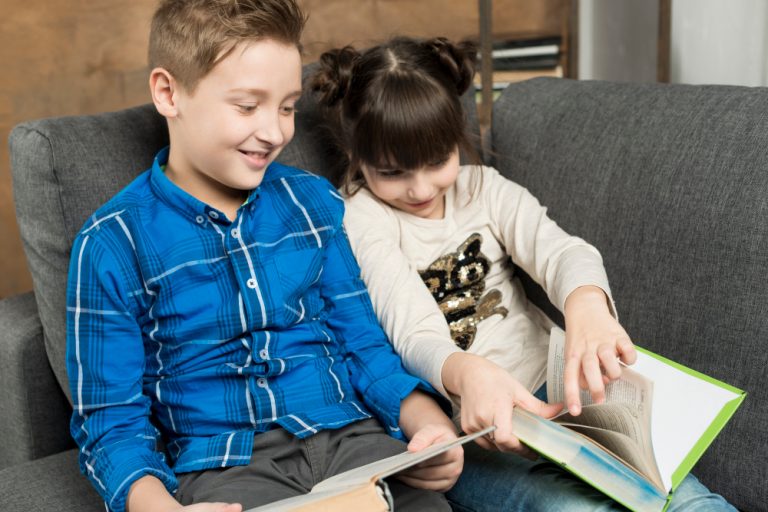
Sit close. Let them turn the pages. Let them ask the same question fifty times. Slow down on the pages they linger on. The book is the excuse for the closeness, and the closeness is the real lesson about kindness anyway. A child who feels seen and heard at home is far more likely to be kind to others, and far more likely to share what they have.
When the Lesson Doesn’t Stick Right Away
Don’t panic if your kid finishes a beautiful book about sharing and then refuses to share anything for the next three weeks. That’s normal. Lessons in early childhood work on a delay. The book is going in. It’s just not coming out yet. Keep reading, keep talking, keep modeling the behavior yourself, and one day you’ll catch your kid offering half their cracker to someone without being asked. That’s the moment all those books were leading toward.
It’s also worth remembering that sharing isn’t a single skill. It branches into taking turns, lending things, giving things away, splitting something fairly, and letting someone go first. Different books tackle different branches. A kid who shares toys easily might struggle with taking turns on the slide. That’s not failure. It’s a different muscle, and there’s probably a book for it.
A Few Practical Tips for Finding Good Ones
Browse the children’s section at your local library and pull anything that catches your eye. Read the first two pages standing up. If the rhythm of the words feels good in your mouth, take it home. If it feels stilted or preachy, put it back. Your gut will tell you, and your kid will agree with your gut about ninety percent of the time.
Ask other parents what their kids ask for at bedtime. The books that get requested over and over are the ones that have something going on. They might not be the books that won awards, but they’re the ones that work.
Don’t ignore older books. A picture book from forty years ago can hold up beautifully. Sometimes the older ones actually handle kindness with more depth than the new ones, because they were written before publishers got nervous about big emotions.
And give your kid some say. Let them pick a couple from the library every visit. Even if their choice is a book about a truck or a dinosaur, they’ll be more invested in reading time when they had a hand in the picks.
A Small Note on the Long Game
Building kindness in a kid is slow work. It happens through hundreds of small moments, including but not limited to the books you read together. Stories about sharing and kindness aren’t a magic fix. They’re more like nutrients. A little bit goes in every day, and over years it becomes part of who the kid is. You won’t always see the effect right away, but it’s there, building underneath, and one day you’ll notice your kid acting in a way that makes you stop and feel quietly proud.
That’s the real payoff. Not the moment the book is finished. The moment, months or years later, when the lesson shows up on its own.